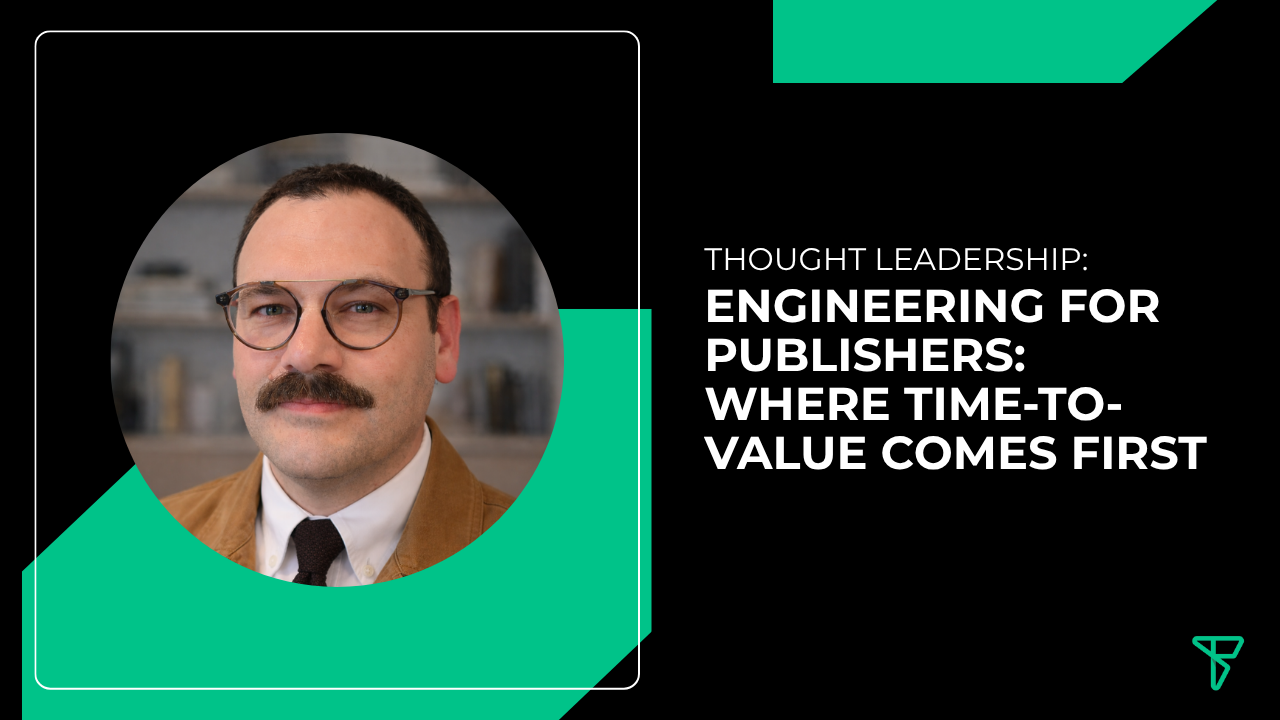
Most people experience programmatic advertising as a page load and an ad slot. My job sits behind that experience, where settings, rules, and workflows shape what the on-page code can do. When those systems are clean, everything downstream moves faster.
Programmatic will keep throwing curveballs. Privacy rules change, browsers change, and demand shifts without asking for permission. On Freestar’s engineering team, our aim is to build platforms that gracefully absorb that chaos rather than push it onto publishers, partners, or our own teams.
Finding the Right Challenge in Adtech
I stumbled into adtech about a decade ago after working at a small startup where the product didn’t feel as meaningful as I wanted. I then joined Sovrn as an engineer and, still relatively new to adtech, got involved with a brand-new platform for publishers to monetize. That was during the birth and early days of Prebid.js, and I was instantly hooked.
The pace pulled me in. You’d open your email and think, “What’s going to be thrown at me today?” and then you’d go solve it. I’d always enjoyed that kind of challenge. Around that time, GDPR and the broader privacy shift were emerging, which made the industry even more dynamic.
I first noticed Freestar while I was still on the partner side. The model—sitting between publishers and the SSP-DSP ecosystem—looked like a place where engineering could remove friction rather than add to it. A recruiter reached out, the team and I clicked immediately, and I joined in February 2018.
What I Lead Now Is Mostly Invisible, and That’s the Point
As Vice President of Engineering, my core responsibility is our behind-the-scenes business systems—the internal platform that lets our teams configure what happens on the page. That includes the Freestar Admin Dashboard (FAD) plus the APIs and internal tools to create configurations, settings, and business rules, which are then picked up by the on-page code.
Leading this work means focusing on outcomes, not flash. These are the APIs that get us from point A to point B in delivering ads on the page. A big part of the job is improving how configurations are created: streamlining workflows and automating what used to be inefficient.
It also means thinking about how different teams use the system day to day. It’s not just about what’s technically possible, but how easily someone on the commercial or operations side can get the right setup live without needing engineering support.
‘Publisher-First’ Is a Time-To-Value Promise
The “publisher-first” mantra we have at Freestar only matters if it leads to better decisions. For me, it starts with time to value: how quickly a publisher can benefit from a change, and how reliably that value shows up.
Everything my team builds should translate into faster setup, fewer errors, and a cleaner path to a healthy auction. Publisher revenue pays real bills, and it supports real businesses. So when we evaluate a change, I keep asking whether it helps publishers reach value sooner and more predictably.
It also means recognizing that even small delays or mistakes on our side can have a real impact on a publisher’s day-to-day revenue.
Replacing Spreadsheets With Systems People Can Trust
A lot of adtech still runs on email threads and spreadsheets, especially around demand partnerships. That might work on a small scale, but it creates friction and mistakes when you’re managing dozens of partners at a time. You end up spending your time copying, pasting, and translating data instead of improving performance.
One major step has been building a portal that lets demand partners enter what we need directly into our system. It’s role-based, so they only see what they’re meant to see, and the data lands where it belongs without manual handoffs.
Internally, we’re also building tools that let teams operate in bulk rather than one configuration at a time, which shortens cycles and reduces errors.
AI Is a Teammate, With Humans Holding the Wheel
AI has changed how we build, but I’m cautious about calling it a solution to everything. We take a human-in-the-loop approach, where tools speed up good judgment rather than replace it. In practice, our engineers use tools like Cursor to prototype faster, automate tests, and iterate quickly when internal teams give feedback. All of this can now be done in hours rather than days.
Documentation has been one of the biggest wins. A single change might require technical documentation for engineers, step-by-step guidance for internal users, and external documentation for partners who use the portal. AI helps generate strong first drafts for each audience, before our teams review, correct, and refine, keeping the system clear as it grows.
A Practical North Star
I joined Freestar because it looked like my kind of challenge—but with a clear mission. Years later, it still is, and I still enjoy it. The work is complex, but the standard doesn’t have to be. When deciding what to build next, I keep coming back to time-to-value, and whether we’re delivering the right thing so the pipes work downstream in the auction. Because for publishers, that usually comes down to one thing: getting paid.