TL;DR
Key Takeaways
100% fill is the wrong goal. Chasing it means lower floors, looser quality controls and lower total revenue. Optimize for yield instead.
Unfilled impressions are part of a healthy setup. Price floors, fraud filtering, brand safety and privacy rules all leave slots blank on purpose.
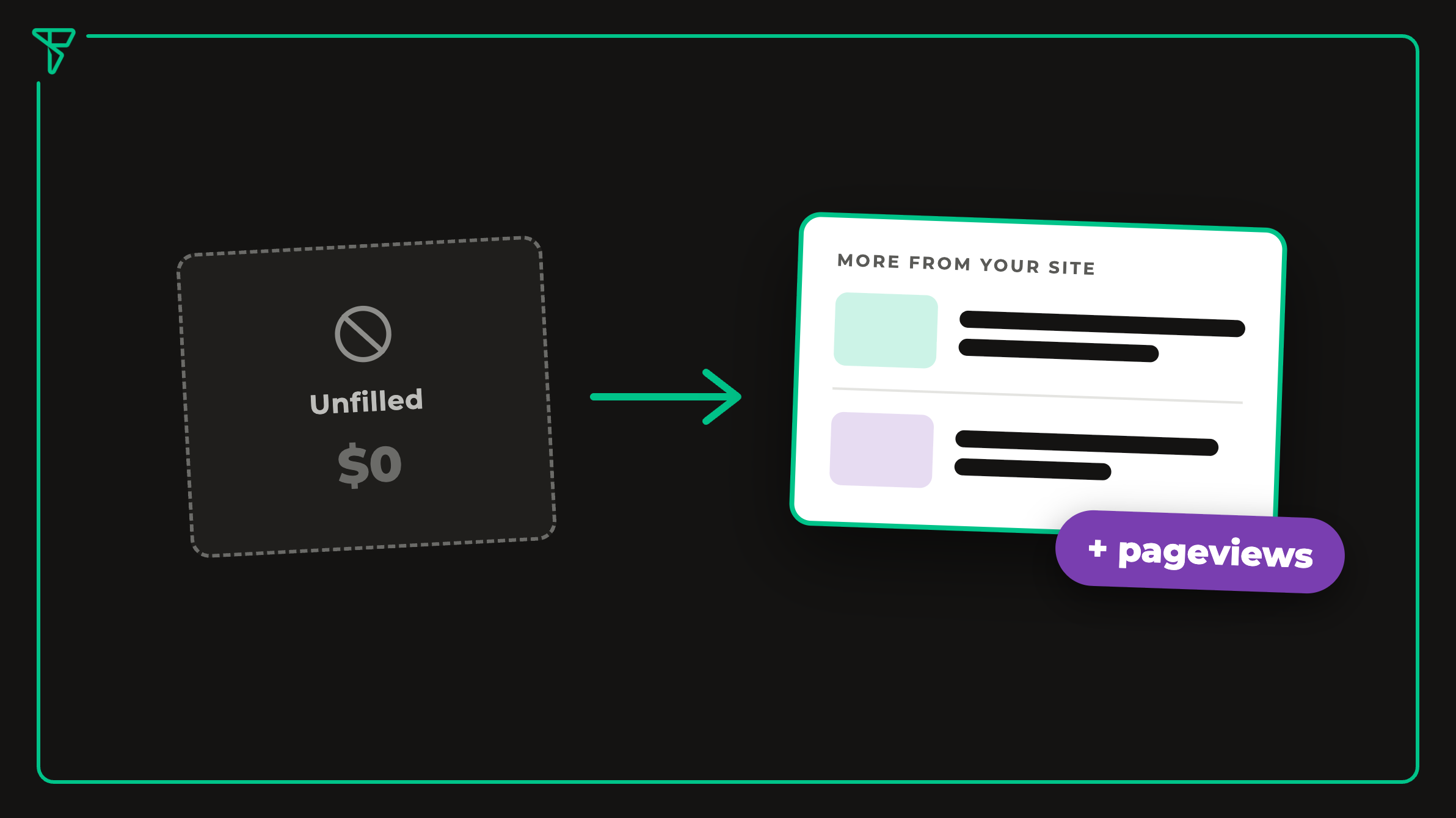
Unfilled doesn’t have to mean $0. Blank slots can recommend your own top-earning articles and turn into new pageviews.
Freestar’s Content Recirculation product can turn any unfilled impression into a potential incremental pageview. With the threat of AI to publisher traffic, we’re focused on retaining the user once they’re on your website!
No publisher’s programmatic inventory fills 100%, and none should. Most unfilled impressions come from rules that protect your CPMs, keep bots away from advertisers and respect your readers’ privacy.
An unfilled impression is an ad opportunity that went to auction but came back without a paid ad. When that happens, the slot collapses, shows a house ad or passes to another source. It’s tempting to read every one as lost money. The better question is what you do with them.
What counts as a healthy fill rate depends heavily on the mix of traffic, formats and geographies. Display inventory from a strong domestic audience may fill at a very high rate, while international, in-app, video or niche inventory may run noticeably lower without anything being broken. The reasons below explain where that gap comes from and why most of it is legitimate.
Pricing and Demand
1. Price floors reject bids on purpose
Floors are the single most common, and most intentional, source of unfilled impressions. When no bid clears the minimum price you set, the impression goes unsold by design. That’s the trade: a few more unfilled requests in exchange for protecting average CPMs and signaling to buyers that your inventory isn’t a bargain bin. Dynamic flooring tools tune this tradeoff impression by impression, but even well-tuned floors will leave some requests unfilled, because the alternative is accepting bids worth less than the slot.
2. Some inventory simply attracts less demand
Advertiser budgets are concentrated in specific markets, devices, and audiences. Traffic from countries where few advertisers buy, older browsers, lower-value placements (deep below the fold, sidebars on long pages) or small niche audiences will receive fewer and lower bids. No configuration change creates advertiser demand that doesn’t exist.
3. Seasonality and budget cycles
Demand rises and falls through the year. Q4 brings heavy holiday spending, while early Q1 typically sees budgets reset and spending drop sharply. Monthly and quarterly pacing creates smaller swings, as campaigns that hit their budgets stop bidding. The same page, audience, and setup can fill at noticeably different rates in December and January without anything having gone wrong.
Quality and Safety
4. Invalid traffic gets filtered out
Every site receives some bot, crawler and otherwise non-human traffic. Fraud-detection vendors, SSPs, and DSPs screen requests before and during the auction, and buyers won’t bid on traffic flagged as invalid. These unfilled impressions are a good sign: they mean bots aren’t being sold to advertisers, which protects your reputation with buyers and keeps you clear of clawbacks.
5. Buyers apply brand-safety and contextual exclusions
Advertisers commonly avoid pages about news tragedies, crime, politics, health conditions, mature themes, or user-generated content they can’t verify. Verification tools, like Amazon Verified Supply, classify your pages, and campaigns that exclude those categories simply don’t bid. Perfectly legitimate journalism or community content can see lower fill as a result. That reflects buyer preference, not a flaw in the setup.
6. Your own blocks narrow the pool
Publishers block ad categories (gambling, dating, alcohol, political ads), specific competitors, low-quality creatives, auto-playing audio or heavy ads that hurt page performance. Every block removes some bidders from the auction. Accepting slightly lower fill to keep your site’s ad experience clean and on-brand is a reasonable business choice.
Privacy, Consent and Regulation
7. Users decline consent or opt out
Under GDPR, U.S. state privacy laws and similar rules, users can refuse consent or opt out of data sale and targeted advertising. Some buyers won’t bid at all without consent signals, and others bid far less. Honoring those choices is a legal requirement, and the lower fill that follows is a cost of operating responsibly.
8. Browser and platform signal loss
Safari and Firefox block third-party cookies by default, and mobile platforms limit device identifiers. Many demand sources rely on those identifiers for targeting, frequency capping and measurement, so requests without them attract fewer bids. Contextual targeting and first-party identity solutions help close the gap, but some unfilled inventory on low-signal traffic is unavoidable for now.
9. Restricted audiences and content
Content directed at children falls under rules like COPPA, which bar behavioral targeting, so personalized demand drops out entirely. Similar limits apply to sensitive health topics or regulated categories in certain regions. Fewer eligible buyers means lower fill, and that is exactly how the rules are meant to work.
Technical Realities
10. Auctions have timeouts
Header bidding and server-side auctions wait only a fixed window, often well under a couple of seconds, for bids to return. Bidders that respond too late are excluded. Longer timeouts would catch more bids but slow the page, hurt user experience/search rankings, and reduce viewability.
11. Users leave before the ad loads
An ad request can fire as a page starts to load, but if the reader bounces, taps away, or scrolls quickly past a lazy-loaded slot, the auction may never complete or the ad may never render. On fast-scrolling mobile layouts and infinite-scroll pages this happens constantly, and it’s a natural consequence of how people browse.
Buyer Behavior and Publisher Strategy
12. Narrow targeting and frequency caps
Campaigns target tightly by audience, location, time of day and context, and cap how often a person sees an ad. Once a loyal reader has hit the caps for the campaigns targeting them, those buyers stop bidding. That’s why heavy repeat visitors, often your most valuable readers, can show lower fill late in a session.
13. Supply path optimization
Buyers increasingly consolidate spend onto fewer, more direct paths to inventory, cutting resellers, and duplicate routes. If a request comes through a path a DSP has deprioritized, it may get no bid even though the same impression would win through a different SSP. The overall result tends to be a healthier ecosystem, but it does leave some requests unfilled.
14. Inventory held back on purpose
Publishers often reserve inventory for direct-sold campaigns, private marketplace deals, sponsorships, or house promotions for their own products and subscriptions. Some also limit ad density on certain pages or for subscribers to protect the reading experience. These impressions may look unfilled in a programmatic report even though they serve a clear business purpose.
What Publishers Can Do About Unfilled Impressions
- Review your own blocks. Category and advertiser blocks are worth revisiting once or twice a year to make sure each one still reflects your brand standards.
- Make consent easy to give. A clear, well-designed consent experience helps more readers opt in, which brings more buyers into the auction.
- Grow logged-in and direct audiences. First-party relationships give buyers signals that third-party cookies no longer provide.
- Put blank slots to work. Content recirculation turns unfilled impressions into new pageviews
How Can You Make Unfilled Impressions Earn Incremental Dollars?
Even with a perfect setup, some slots will come back blank, but don’t have to earn nothing.
Freestar is now partnering with Gamera for content recirculation, to fill slots that paid demand didn’t fill with native recommendations for your own top-earning articles. Paid demand always serves first, so recirc only fires after the auction leaves a slot blank. Units match your site’s fonts and colors, and article picks refresh every few hours using per-article revenue data. A dedicated UTM tag tracks every click, pageview, and session, so you can see exactly how much incremental traffic you receive.
Conclusion
Unfilled inventory is the visible cost of floors that protect pricing, filters that keep fraud out, and controls that respect your readers. Rather than chasing 100% fill, focus on yield: the total revenue earned from your audience over time. And when a slot does come back blank, put it to work with Freestar Content Recirculation!
Want to work with Freestar?
Get in touch for a revenue consultation.