TL;DR
Key Takeaways & Quick Actions
Brand Suitability is the New Battleground: Meeting basic “Brand Safety” standards is no longer enough. High-paying premium advertisers use highly automated, custom suitability matrices (filtering for news, profanity, and mature themes) that can quietly redirect their budget away from your site.
The “One-Strike” Suppression Risk: Major DSPs (like Amazon Ads) now run continuous, AI-driven audits. A single unmoderated comment, NSFW keyword in a headline, or poor page-experience signal can automatically blacklists your entire domain from premium, high cost-per-mille (CPM) campaigns.
UGC is Under Fire: Demand partners are increasingly rejecting sites with any form of User-Generated Content (UGC) unless it is 100% moderated.
Action Plan for Q4
To maximize your Q4 ad revenue, immediately moderate or de-monetize UGC areas, remove strong language from headlines and URLs, limit ad density, and ensure ad refresh rates are set to no fewer than 30 seconds.
Q4 is here, which means it’s time to start preparing your website for increased buyer demand. Advertisers are most interested in high-quality, brand-safe environments, with performance still being top of mind. This year, we’ve seen advancements in supply quality measures taken by demand partners, like Amazon, The Trade Desk, and Index Exchange.
Brand safety is now considered table stakes. Brand suitability is what separates you from the many that meet that bar, because each advertiser sets its own limits on topics like news, profanity and mature themes, and passing those settings decides how much of a campaign’s budget actually reaches your site.
Inventory is screened and scanned at a continuous rate rather than a one-time approval. And, due to AI advancements, most buyer platforms have new signals available to exclude supply, such as high ad density and low viewability. Advertisers also look at ad layout, ad density, refresh rate, viewability, and more. As a result, many publishers are being filtered out of premium campaigns without knowing it simply because of the topics they cover, the keywords they use, and their on-page experience.
The good news is that these levers are in your control and, with the right strategy, completely fixable.
Why Does Content Matter to Advertisers? (The “Why” Under the Hood)
Advertisers care about the content surrounding their ads because placement directly shapes how consumers perceive their brand.
However, in today’s programmatic ecosystem, this care has been automated into strict, sitewide filtering mechanisms.
Conflating “Brand Safety” with “Brand Suitability” is where many publishers lose revenue:
- The Brand Safety Floor is a small, universal set of unmonetizable categories (e.g., hate speech, violence) that applies to everyone.
- The Suitability Framework sits on top of that floor. It is a highly customizable risk matrix (covering news, politics, mature themes, and User-Generated Content) that individual advertisers dial up or down based on their own risk tolerance.
This taxonomy descends from the Global Alliance for Responsible Media’s (GARM) original framework (now stewarded by bodies like the American Association of Advertising Agencies’ Protection Bureau) and directly underpins how Verification Vendors (like Integral Ad Science and DoubleVerify) and Demand-Side Platforms (DSPs) classify your pages
The Operational Impact: The Curation Delta & One-Strike Exclusions
Why does this shift to automated suitability matter so much to your bottom line?
- The “One-Strike” Suppression: DSPs like Amazon Ads now use centralized Content Exclusion Categories. This means a buyer can fine-tune suitability settings across all supply sources from a single, unified interface. Consequently, a single weak content or suitability signal can automatically suppress your eligibility across an advertiser’s entire footprint, rather than just blocking a single ad placement or deal.
- Earned, Not Granted Monetization: Demand partners are shifting toward an “earned supply” model. We can see this in how Amazon-owned properties like Twitch operate: monetization isn’t a default setting. New creators must actively earn ad eligibility through ongoing engagement, audience metrics, and strict guideline adherence. Amazon’s broader open-web verified supply is continuously moving toward this “continuous audit” reality.
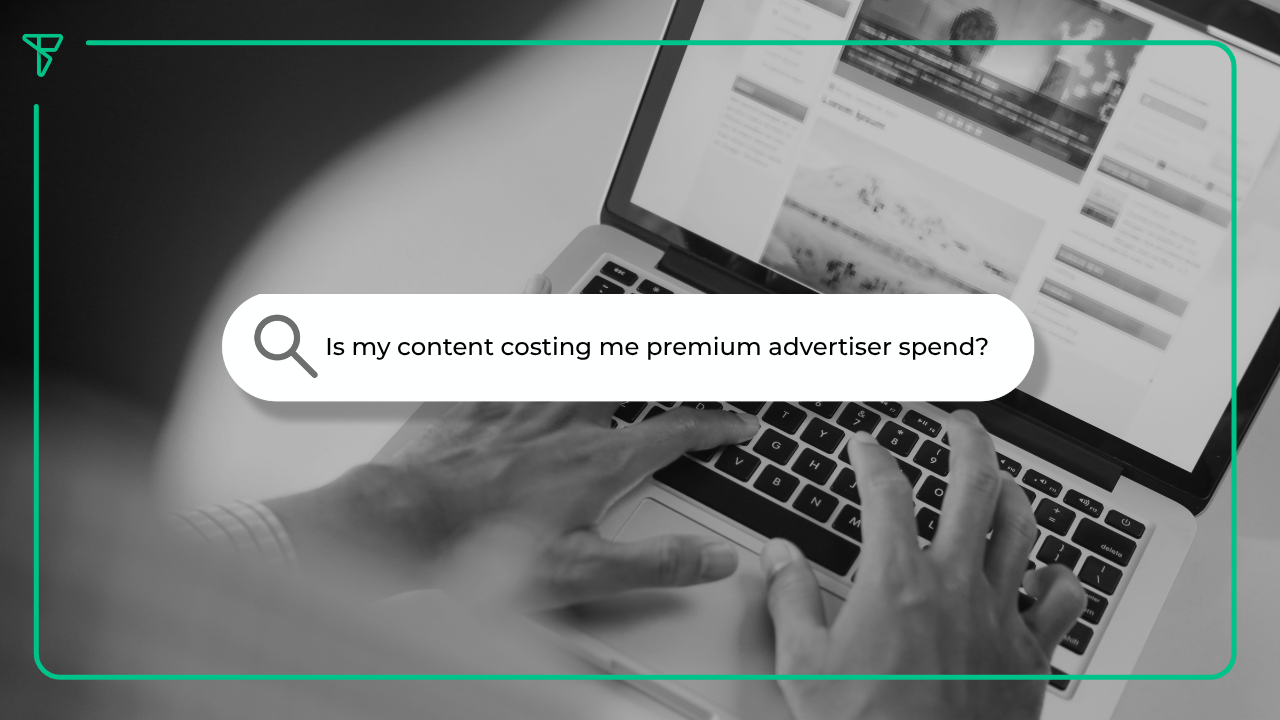
- The Price of Invisible Filtering: If your content triggers an advertiser’s suitability filter, you aren’t always blocked outright. Often, your inventory is simply excluded from premium, high-CPM campaigns and passed down to lower-value open auctions. This “suitability gap” is often the only difference between receiving a partial, discounted fill and capturing 100% of an advertiser’s allocated premium spend.
Tactics To Ensure Your Content Isn’t Working Against You
The real revenue winners are publishers who provide high-quality content in trusted environments with the ability to actively improve campaign performance, leading to stronger engagement, attention metrics, and recall rates.
1. Keep Content Moderated
This goes for editorial content as well, but publishers with UGC such as comments, forums, reviews, photo uploads, etc. must moderate since this content can potentially include hate speech, misinformation, explicit content, or other brand-unsafe elements that make advertisers hesitant to appear in this area.
This year we’ve seen several demand partners reject sites with any form of UGC, unless 100% moderated. To keep that inventory monetizable, publishers have several options. They can combine automated moderation tools, such as AI-driven classifiers and keyword filters, with human review teams to catch problematic content before or shortly after it goes live.
If there is UGC on your site, the safest approach to keeping the entire domain safe is to de-monetize those areas.
2. Cut Back on Non-Brand Safe and NSFW Content
Profanity and explicit content usually aren’t banned outright. Instead, they fall into the suitability categories that individual advertisers can turn down or off. That makes it one of the easiest ways to lose advertising spend without noticing. A page can pass every safety check and still be skipped by the brands you most want.
Keep strong language out of headlines and URLs and use only when necessary. If adult or mature content is core to your audience, keep it de-monetized, and in a clearly separate section so it doesn’t pull down how buyers see your whole domain.
3. Evaluate the Real Value of Your UGC
UGC can build engagement, but it also brings risk you don’t control. Amazon says it gives inventory with UGC extra human review and judges how strong a publisher’s moderation is. One unmoderated comment thread can get a clean article flagged. This has become too large a risk to take by advertisers, and many block UGC sites outright.
Weigh what each UGC feature adds to your brand and to your site experience against what it could cost you. Depending on the answer, is it worth keeping? It might be best to remove it altogether. At a minimum, you must moderate comments before they appear, de-monetize UGC areas, and move UGC to a sub-domain or its own section.
4. Prioritize User Experience and Ad Density
Heavy ad loads make a site look like it was made for advertising (MFA), and buyers are actively screening for that. The Association of National Advertisers found MFA impressions rose to 1.1% in Q1 2026, up from 0.4-0.6% in 2025, and flagged AI-generated content as a growing concern. Cap the number of ads a user sees per minute, limit overly invasive ad formats, and set refresh rate to no fewer than 30 seconds. Your website should also serve users with fast and stable pages.
Fewer, better impressions get viewed more, perform better, and get bought again. Over time, as those signals get to the buyers, you will attract higher quality advertisers who will pay higher CPMs to be shown to your audience. Premium advertisers want to be seen in places that reflect well on their brand.
Clean Up Now, Cash In This Q4
Keeping website content clean is no small undertaking, but the payoff is worth every flagged comment and filtered keyword. A safe, welcoming space keeps your readers coming back and gives advertisers the confidence to open their wallets.
With Q4 upon us—the most wonderful time of the year for ad spend!—there’s no better moment to make your site the place where brands want to be. Roll up your sleeves, polish up that inventory, and get ready to deck the halls with premium demand.
Frequently Asked Questions (FAQs)
What is the difference between “Brand Safety” and “Brand Suitability”?
Brand Safety is the baseline “floor” that applies to almost all advertisers, universally blocking monetization on extreme content like violence, hate speech, or illegal activities. Brand Suitability is a highly customizable framework layered on top of that floor. It allows individual brands to decide their own comfort levels regarding softer topics like politics, news, profanity, or user comments.
Why am I losing premium ad revenue if my site hasn’t been explicitly banned?
This is due to invisible filtering or the “suitability gap.” When your pages trigger an advertiser’s custom suitability filters (e.g., due to an unmoderated comment or a keyword like “kill” in a news headline), your inventory isn’t banned from the web—it is simply excluded from high-paying, premium campaigns. Your ad slots are then passed down to lower-value open auctions, heavily discounting your CPMs.
Can I keep UGC on my site and still capture premium demand?
Yes, but only if it is 100% moderated. Due to strict guidelines from demand partners like Amazon, an unmoderated UGC thread can get an otherwise pristine article flagged. To keep UGC monetizable, you must combine automated moderation tools (AI filters, keyword blocks) with human review teams. If you cannot guarantee 100% moderation, the safest financial choice is to completely de-monetize or remove those UGC sections.
How does on-page user experience affect my programmatic ad revenue?
Ad buyers now continuously scan sites for user experience signals to weed out MFA sites. If your site has high ad density, invasive ad formats, slow page speeds, or rapid refresh rates, automated buyer platforms will flag and filter your supply. Keeping your ad refresh rate to no fewer than 30 seconds and capping total ads per minute will improve your viewability scores and attract premium CPMs.
Want to work with Freestar?
Get in touch for a revenue consultation.