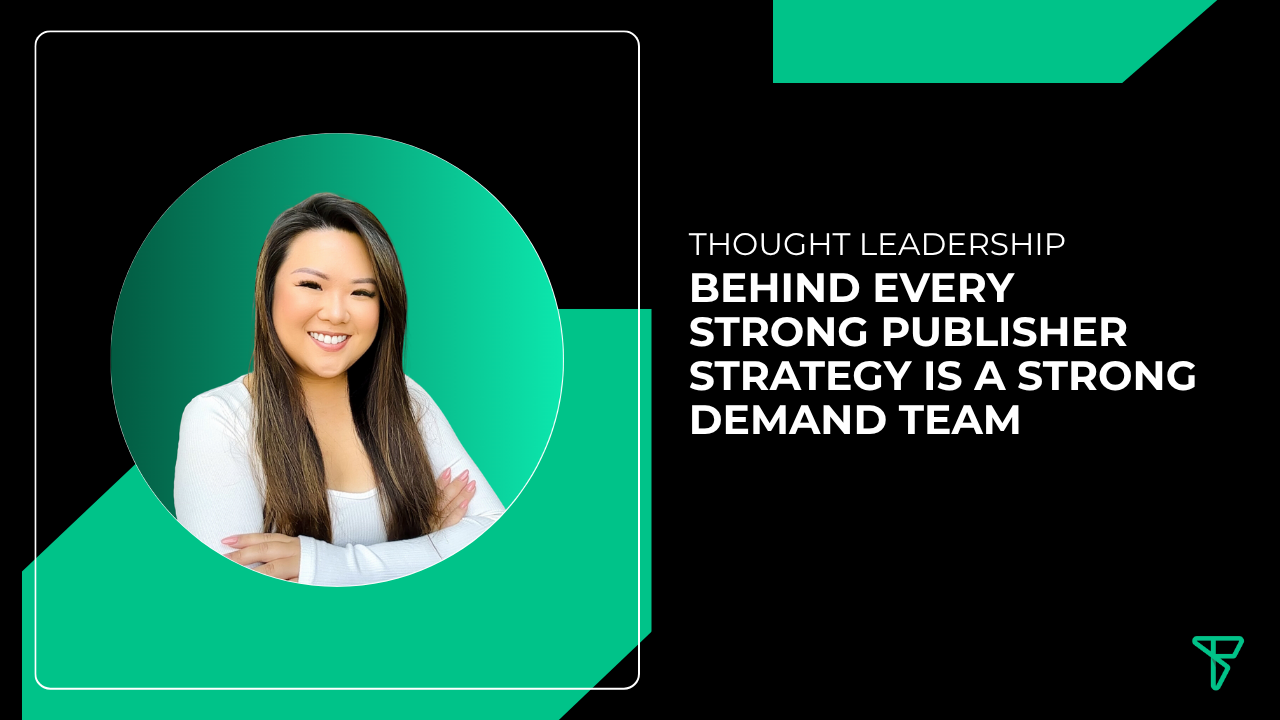
At Freestar, we talk a lot about being “publisher first.” I think that idea only means something if it informs how your team is built, how your partners are managed, and how much complexity you take off a publisher’s plate.
For me, building a publisher-first demand team has meant creating a unit that can advocate externally, solve problems behind the scenes, and recently, use AI where it genuinely removes friction instead of adding more noise.
Build for the Job, Not the Org Chart
Like many, I didn’t set out to be in adtech. I studied psychology and was drawn to advertising because it felt like a place where I could apply my interest in how people think and behave. I joined Freestar when a former manager recruited me to help build a new revops function from the ground up.
When I started, Freestar was a much smaller company of about 30 people. Our team was new, and for a while everyone did everything because that’s what growth required. As the business expanded, that model needed to evolve, so we organized the team around three distinct functions — demand partnerships, demand ops, and demand analytics — because publishers are better served when responsibilities are clear and expertise can go deeper.
The structure is important, but culture is even more so. I’ve always felt strongly that people should enjoy their jobs, and that sounds simple until you’re under pressure and short on resources. In a particularly busy Q4, when we were short staffed and one teammate was on maternity leave, leaders from operations and analytics volunteered to take on partner accounts that were outside their normal roles. That kind of support tells you whether a team is real or just well-described on paper.
Scaling the Invisible Network
A lot of the work my team does is invisible to publishers, even though it affects their business directly. We often operate as the escalation point behind the scenes, maintaining partner relationships, pushing for answers, and troubleshooting issues. This behind-the-scenes revenue work is performed specifically to allow publishers to focus entirely on their core strength: creating content. When that work is done well, publishers feel the outcome before they ever see the process — they get clearer answers, fewer surprises, and the peace of mind that we are ensuring they receive every dollar they deserve, on time.
Being publisher first also means doing this at scale. Our partners constantly tell us what they’re looking for, especially around supply quality, brand safety, and the kinds of content they will and won’t approve. My team’s job is to aggregate that feedback, make sense of it, review publisher sites against it, and then turn it into something useful, so a publisher understands what to fix if they want a better shot at unlocking spend from partners like Amazon, The Trade Desk, or Index Exchange.
That’s also why I don’t see being publisher-first as a single team’s responsibility. The customer success team and yield team have the day-to-day context on individual publishers, while my team works at more of a network level, looking across patterns and partner feedback. Those views need each other, because a macro view without publisher context can miss the nuance, while a micro view without partner-wide insight can miss the bigger opportunity.
Reducing Manual Tasks With AI
AI is most useful when it starts with a very ordinary question: What’s eating up time, and does that work actually need to stay manual? Publisher onboarding is a good example. Every time we onboard a site, we have to ask each demand partner whether they will approve it. And when you’re dealing with 50 or 60 partners, each with its own process and policy set, that becomes a lot of repetitive operational work very quickly.
The same thing happens with ad quality. A publisher may want to add one more item to a blocklist, which sounds trivial until you realize the request has to be communicated and managed across dozens of partners. One of the most helpful tools has been NotebookLM instances built around our partners’ policies and approval guidelines, so we can assess likely approval outcomes earlier, as well as be more prescriptive about what will or won’t pass review. In addition to using NotebookLM for quicker, more automated scans across our partners’ policies, we also have a dedicated team handling inventory quality checks who uses various tools to review sites before onboarding and monitor sites after launch.
It’s important because better guidance earlier in the process is better for everyone. Because of Freestar’s policies and guidelines for our publisher partners, they are able to more efficiently handle our processes due to the trust we’ve built with them — leading to faster outcomes. Publishers know that when they work with Freestar, they are part of a cohort with other highly trusted publishers.
Internally, I also use Gemini to find information quickly across documents and contracts, and to take clean meeting notes. This might sound small, but it gives people back the attention they need to actually be present and make better decisions.
Putting publishers first has never been about a slogan for me. It’s about building a team that knows where it adds value, earns trust through the work, and keeps improving the systems around that work as the business grows. That’s what makes a demand team actually function, and it’s what helps “publisher first” move from something you say to something people can feel in the results.